

Sulfur hexafluoride is an odd sort of gas. It’s about five times heavier than air, so a light foil boat can appear to float on an invisible pool of it. It also gives students a neat exam question: is sf6 polar or nonpolar? The molecule is nonpolar, even though each of its bonds is strongly polar. Here’s how both of those things can be true.
Start with the bonds
A bond is polar when two atoms pull on the shared electrons with different strength. Chemists measure that pull as electronegativity. On the Pauling scale, sulfur scores about 2.58 and fluorine about 3.98, the highest of any element. The difference is 1.40, which is large. In every S-F bond, the electrons spend more time near the fluorine, leaving the sulfur a bit positive.
If that were the whole story, you’d expect a polar molecule. But bond polarity has a direction as well as a size, and that’s the part many people skip.
Now look at the shape
Sulfur has six valence electrons. In SF6 it uses all of them in bonding, one for each fluorine, so there are no lone pairs left on the central atom. Six bonding pairs arrange themselves as far apart as possible, and the result is an octahedron.
You can picture it with a simple model. Put a ball at the center, then place one fluorine above, one below, one in front, one behind, one to the left and one to the right. Every neighboring pair of bonds sits at 90 degrees. All six bonds are the same length.
Why the pulls cancel
Think of six people around a ring, each pulling a rope with equal strength. The one on the left pulls exactly as hard as the one on the right, so the ring doesn’t move sideways. The same goes for front and back, and for up and down. Nothing shifts.
In the molecule, each polar bond has a partner pointing the opposite way. The pairs cancel, and the net dipole moment is zero. A molecule with no net dipole is nonpolar, and that settles it.
A useful comparison
SF4 looks similar on paper, but it’s polar. With only four fluorines, its sulfur keeps one lone pair, and that pair bends the molecule into what’s called a seesaw shape. The pulls no longer balance. So if you swap a formula in a test, don’t assume the answer carries over.
Water is another good contrast. Its two O-H bonds are polar, and lone pairs bend the molecule so that the pulls add together. Carbon dioxide goes the other way: it has two polar bonds in a straight line, which cancel just as they do in SF6.
Does it matter outside class?
It does. SF6 molecules attract each other only weakly, through dispersion forces, so the substance is a gas at room temperature and turns from solid to gas at around minus 64 degrees Celsius at normal pressure. It doesn’t dissolve well in water either, as you’d expect for something nonpolar.
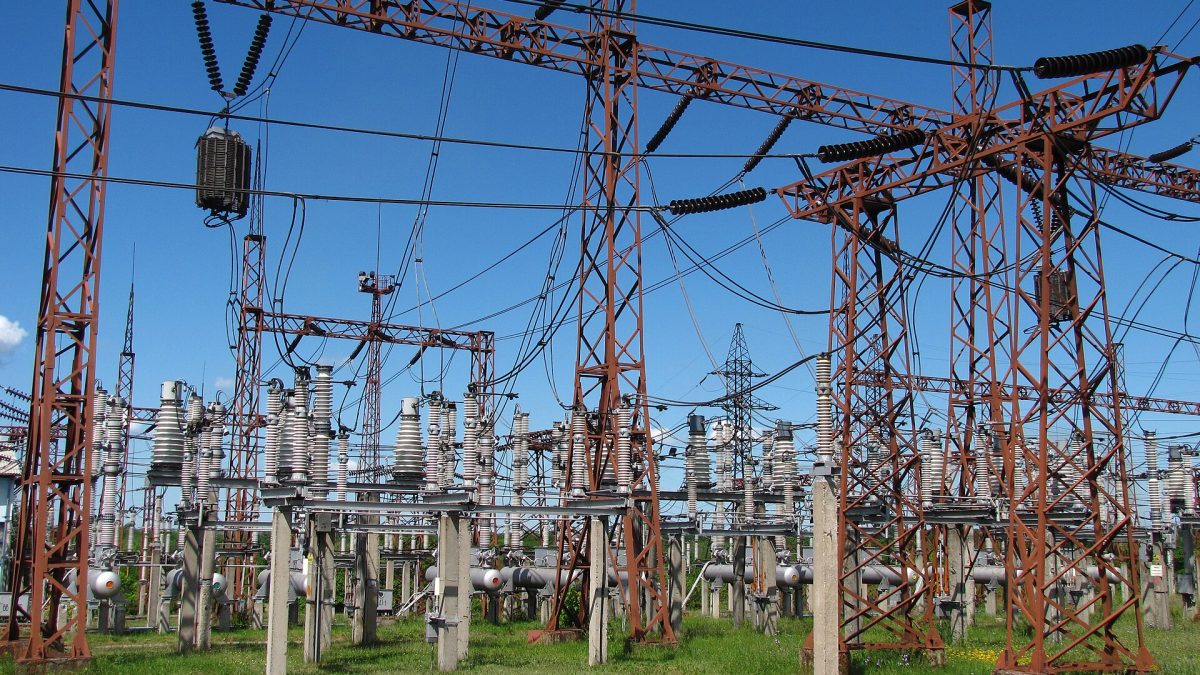
It’s also very unreactive and resists electrical breakdown, so power companies have used it for decades inside high-voltage switches. The catch is its effect on the climate. Over a hundred years it traps more than twenty thousand times as much heat as the same mass of carbon dioxide, and it lasts for a very long time in the air. That’s why engineers are working on replacements.
Common slips
The first is stopping at the electronegativity step. A big difference tells you that the bonds are polar and nothing more. The second is worrying about the octet rule. Sulfur has twelve electrons around it in the usual drawing, and that’s accepted for elements in the third period and below. The third is drawing the molecule flat and forgetting that two of the fluorines point up and down.
A three-step habit keeps you safe: check the bonds, work out the shape, then see if the pulls cancel. You’ll find similar questions about other molecules on compairro.com, and the same three steps work for those too.